Healthcare organizations subject to the HIPAA Security Rule are expected to maintain documentation that demonstrates compliance efforts, administrative safeguards, workforce training, risk management activities, and ongoing operational oversight.
For small healthcare practices, preparing for a potential audit or investigation often comes down to one critical question: can you produce evidence that your HIPAA compliance program is active and documented?
This checklist outlines the types of evidence small practices should be prepared to produce during internal compliance reviews, OCR investigations, breach investigations, insurance or partner due diligence requests, or formal HIPAA audit activity.
Why HIPAA Audit Evidence Matters
HIPAA compliance is not only about having policies in place.
Regulators and investigators often expect organizations to demonstrate that:
- policies are reviewed and maintained
- workforce members are trained
- risk analyses are performed
- incidents are documented
- safeguards are actively managed over time
In many cases, the absence of documentation becomes a major compliance issue, even when a practice believes it is generally following HIPAA requirements.
For small practices, evidence collection is often challenging because documentation becomes scattered across email threads, spreadsheets, paper binders, shared drives, HR systems, and vendor portals.
HIPAA Audit Evidence Checklist
The following categories represent common documentation areas healthcare practices should maintain and periodically review.
1. HIPAA Risk Analysis Documentation
Risk analysis documentation is one of the most important categories of audit evidence under the HIPAA Security Rule.
Review the guide to HIPAA risk analysis requirements for more detail on how this requirement works for small practices.
Organizations should maintain:
- documented risk analyses
- identified vulnerabilities and threats
- remediation plans
- review dates
- evidence of ongoing updates
Examples of evidence include completed risk assessment reports, risk scoring worksheets, remediation tracking records, annual review documentation, and meeting notes discussing identified risks.
2. HIPAA Policies and Procedures
Practices should maintain current versions of HIPAA-related policies and procedures along with evidence that documents are reviewed and updated over time.
Review what HIPAA policies and procedures small practices need to keep this documentation aligned with actual workflows.
Examples include:
- Privacy Rule policies
- Security Rule safeguards
- breach notification procedures
- workstation policies
- access control procedures
- data retention policies
- incident response procedures
Important evidence may include revision histories, approval records, review dates, employee acknowledgments, and policy distribution logs.
3. Workforce HIPAA Training Records
Training documentation is frequently requested during investigations and compliance reviews.
Practices should retain:
- employee training completion records
- training dates
- course materials
- acknowledgment forms
- refresher training documentation
- role-specific security training records
Evidence examples include signed acknowledgment forms, LMS completion reports, attendance sheets, email confirmations, and training certificates.
4. Business Associate Documentation
Organizations should maintain documentation related to vendors and third-party service providers that handle protected health information (PHI).
Examples include:
- Business Associate Agreements (BAAs)
- vendor risk reviews
- signed contract records
- renewal tracking
- vendor inventory documentation
Evidence should demonstrate which vendors access PHI, whether agreements are current, and how vendor relationships are monitored.
5. Security Incident and Breach Documentation
Even minor security incidents should be documented and tracked consistently.
This is also one of the areas where common HIPAA violations can become more serious if the practice cannot show what happened and how it responded.
Practices should maintain:
- incident reports
- breach investigation notes
- mitigation actions
- notification timelines
- corrective action documentation
- communications logs
Examples of evidence include phishing incident investigations, unauthorized access reviews, lost device reports, ransomware response documentation, and breach determination records.
6. Access Control and User Management Records
Practices should maintain records showing how workforce access to systems and PHI is managed.
Examples include:
- onboarding and offboarding checklists
- user access approval records
- terminated employee access removal
- password policy enforcement
- MFA implementation records
- role-based access documentation
Potential evidence includes audit logs, account review reports, EHR permission records, IT tickets, and system screenshots.
7. Device and Asset Management Records
Maintaining an inventory of systems and devices that store or access PHI can support multiple HIPAA safeguard requirements.
Examples include:
- workstation inventories
- encrypted laptop documentation
- mobile device tracking
- disposal records
- backup system records
Evidence examples include device inventories, encryption verification, disposal certificates, and hardware replacement records.
8. Audit Logs and Monitoring Records
Organizations should retain evidence showing that systems are monitored and reviewed appropriately.
Examples may include:
- login audit logs
- failed access attempts
- EHR activity monitoring
- firewall or endpoint security reports
- administrative review records
Small practices do not necessarily need enterprise-grade SIEM tooling, but they should demonstrate reasonable monitoring processes appropriate to their environment.
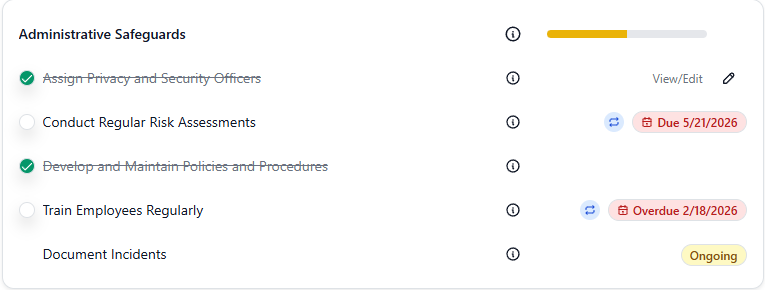
Many HIPAA compliance issues are caused by missed deadlines, incomplete documentation, and lack of tracking. HIPAA Assistant's compliance tracking features help small practices stay organized before those gaps become problems.
9. HIPAA Compliance Review and Maintenance Activities
Ongoing compliance activity itself should also be documented.
A practical HIPAA compliance checklist can help keep review activities visible and organized.
Examples include:
- annual compliance reviews
- checklist completion records
- remediation follow-up
- meeting minutes
- task tracking
- periodic safeguard reviews
This category is especially important because HIPAA compliance is intended to be an ongoing operational process rather than a one-time project.
How Long Should HIPAA Documentation Be Retained?
HIPAA generally requires organizations to retain required documentation for at least six years from:
- the date the documentation was created
- or the date it was last in effect, whichever is later
Retention requirements can also vary based on state law, employment regulations, litigation holds, contractual obligations, or payer requirements.
Practices should maintain a documented record retention policy that aligns with their operational and legal requirements.
Common Problems Small Practices Encounter During Audits
Many small healthcare organizations struggle with:
- incomplete documentation
- outdated policies
- inconsistent training records
- scattered spreadsheets
- expired BAAs
- undocumented remediation efforts
- missing evidence of ongoing review activity
In many cases, organizations may believe they are compliant operationally but cannot easily produce supporting evidence when requested.
Organizing HIPAA Audit Evidence
A centralized compliance management process can help practices:
- track required documentation
- maintain review schedules
- organize audit evidence
- manage remediation activities
- reduce administrative overhead
HIPAA Assistant helps small healthcare practices organize compliance workflows, manage documentation, track recurring tasks, and maintain operational visibility across HIPAA compliance activities.