HIPAA compliance can feel overwhelming for small healthcare practices.
With multiple requirements, deadlines, and responsibilities, it’s easy for critical tasks to be missed.
A structured checklist can help ensure nothing falls through the cracks.
Why a Checklist Matters
Most HIPAA violations occur due to:
- missed steps
- lack of tracking
- inconsistent processes
A checklist provides visibility and accountability.
Core HIPAA Compliance Checklist
1. Conduct a Risk Analysis
Review our guide to HIPAA risk analysis for more detail.
- Identify all ePHI locations
- Assess risks and vulnerabilities
- Document findings
2. Maintain Policies and Procedures
Review what HIPAA policies and procedures small practices need.
- Create required policies
- Keep them updated
- Ensure staff are aware
3. Train Staff
Review what HIPAA employee training requirements mean for small practices.
- Provide regular HIPAA training
- Document completion
- Address common risk areas
4. Manage Access Controls
- Limit access to authorized users
- Remove access when staff leave
- Avoid shared credentials
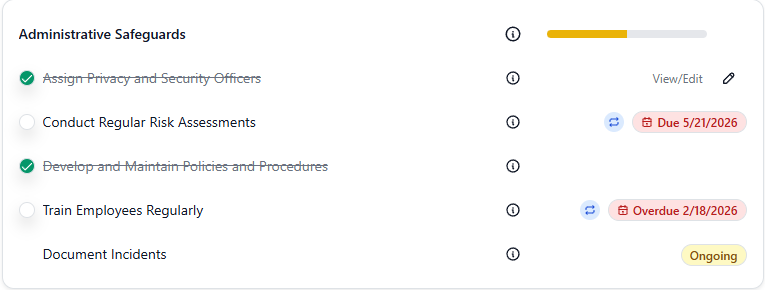
Many HIPAA compliance issues are caused by missed deadlines, incomplete documentation, and lack of tracking. HIPAA Assistant’s compliance tracking features help small practices stay organized before those gaps become problems.
5. Handle Patient Access Requests
Review our guide to HIPAA Right of Access requirements for more detail.
- Track all requests
- Meet required timelines
- Document fulfillment
6. Secure Data Storage and Transmission
- Protect systems containing ePHI
- Use secure communication methods
- Monitor vulnerabilities
7. Manage Vendors and BAAs
- Identify all vendors handling PHI
- Maintain Business Associate Agreements
- Review relationships regularly
8. Prepare for Incidents
- Define breach response procedures
- Document incidents
- Meet reporting requirements
Turning a Checklist Into a System
A checklist is only effective if it is actively used.
That means:
- assigning responsibility
- tracking completion
- reviewing regularly
Without a system, even a good checklist can fail.
How HIPAA Assistant Helps
HIPAA Assistant turns compliance checklists into actionable workflows.
With HIPAA Assistant, you can:
- Track tasks and deadlines
- Assign responsibilities
- Maintain documentation
- Ensure nothing is missed
Final Thought
HIPAA compliance doesn’t have to be overwhelming.
With a clear checklist and structured tracking, small practices can manage requirements effectively and reduce risk.