HIPAA requires healthcare practices to maintain written policies and procedures that govern how protected health information is handled.
For small practices, this requirement is often misunderstood or underestimated.
In reality, policies and procedures are a core part of demonstrating compliance.
What Are HIPAA Policies and Procedures?
Policies define what your practice is required to do.
Procedures define how those policies are carried out.
Together, they form the operational foundation of your compliance program.
Common Mistakes Small Practices Make
1. Using Generic Templates Without Customization
Templates are common—but often misused.
What goes wrong:
- Policies don’t reflect actual workflows
- Key systems and processes are missing
- Staff cannot follow them in practice
Why it matters:
Policies must match how your practice actually operates.
2. Policies Are Not Updated
Healthcare environments change constantly.
What goes wrong:
- Policies become outdated
- New tools or vendors are not reflected
- Risk analysis findings are not incorporated
Why it matters:
Outdated policies can create compliance gaps.
3. Staff Are Not Aware of Policies
Documentation alone is not enough.
What goes wrong:
- Policies are not communicated
- No training is provided
- Staff follow inconsistent processes
Why it matters:
Policies must be implemented—not just written.
Many HIPAA compliance issues are caused by missed deadlines, incomplete documentation, and lack of tracking. HIPAA Assistant’s compliance tracking features help small practices stay organized before those gaps become problems.
4. Lack of Documentation and Version Control
Without tracking, policies lose value.
What goes wrong:
- No record of updates
- No version history
- No proof of review
Why it matters:
You must demonstrate that policies are maintained over time.
What Policies Are Typically Required?
While requirements vary, most practices need policies covering areas identified through their risk analysis:
- access control
- data security
- breach response
- patient access requests
- data disposal
- vendor management
These policies should align with your risk analysis and actual workflows.
How Policies Connect to Compliance
Policies and procedures support:
- risk analysis findings
- prevention of common HIPAA violations
- audit readiness
- staff accountability
A practical HIPAA compliance checklist can help keep policy updates and reviews from falling behind.
Without them, compliance becomes inconsistent and difficult to prove.
How HIPAA Assistant Helps
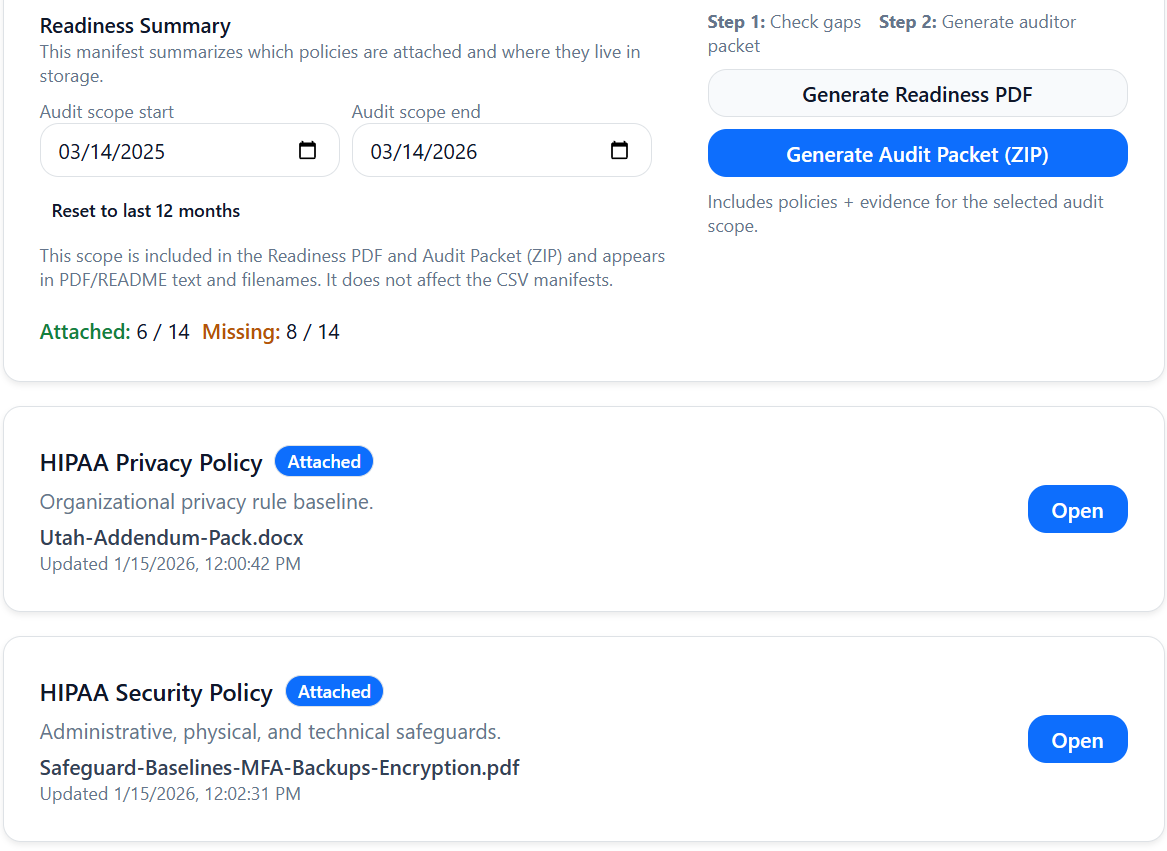
HIPAA Assistant helps small practices organize and maintain their policies and procedures.
With HIPAA Assistant, you can:
- Track policy updates
- Maintain version history
- Align policies with risk assessments
- Ensure documentation is audit-ready
Final Thought
HIPAA policies and procedures are not just documentation—they are how your practice operationalizes compliance.
When they are clear, current, and followed, they significantly reduce risk.