Small healthcare practices are frequently cited for one specific HIPAA failure: not conducting a proper risk analysis.
The Office for Civil Rights (OCR) consistently identifies missing or incomplete risk analyses as a root cause in enforcement actions.
Understanding what a HIPAA risk analysis actually requires—and how to approach it—can significantly reduce your compliance risk.
What Is a HIPAA Risk Analysis?
A HIPAA risk analysis is a required process under the Security Rule that helps identify:
- Where electronic protected health information (ePHI) is stored
- Potential risks and vulnerabilities
- The likelihood and impact of those risks
It is not optional, and it is not a one-time task.
What Small Practices Get Wrong
1. Treating It as a One-Time Activity
Many practices complete a risk analysis once and never revisit it.
What goes wrong:
- Changes in systems are not evaluated
- New risks go unnoticed
- Documentation becomes outdated
Why it matters:
HIPAA requires risk analysis to be an ongoing process, not a one-time checkbox.
2. Using Incomplete or Generic Templates
Templates can help—but only if they are fully customized.
What goes wrong:
- Risks specific to the practice are not identified
- Critical systems are overlooked
- Documentation lacks detail
Why it matters:
Generic or incomplete analyses do not meet HIPAA requirements.
3. Failing to Identify All ePHI Locations
Many practices underestimate where data exists.
What goes wrong:
- Ignoring backups or local devices
- Overlooking third-party systems
- Missing cloud-based tools
Why it matters:
You cannot protect what you haven’t identified.
4. Not Assessing Risk Severity
Identifying risks is not enough—you must evaluate them.
What goes wrong:
- No prioritization of risks
- No assessment of likelihood or impact
- No clear remediation plan
Why it matters:
Without prioritization, critical risks may go unaddressed.
5. Lack of Documentation
Even if work is done, it must be documented.
What goes wrong:
- No written record of analysis
- No evidence for audits
- No tracking of updates
Why it matters:
During an investigation, documentation is essential.
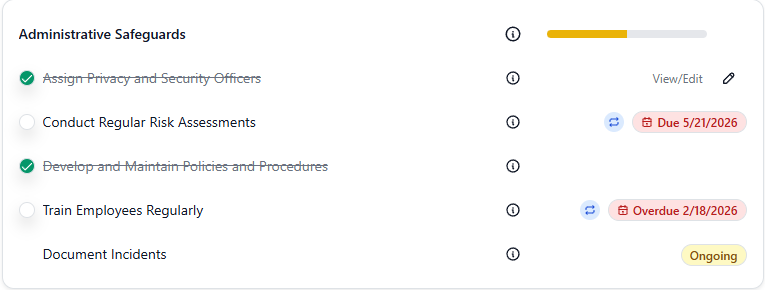
Many HIPAA compliance issues are caused by missed deadlines, incomplete documentation, and lack of tracking. HIPAA Assistant’s compliance tracking features help small practices stay organized before those gaps become problems.
How Risk Analysis Connects to Other HIPAA Requirements
Risk analysis is not isolated—it impacts everything else.
It directly supports:
- identifying common HIPAA violations
- developing policies and procedures
- updating employee training based on current risks
- managing access controls
- preparing for audits
It also ties closely to real enforcement cases involving small practices, where gaps in risk analysis often lead to violations.
How to Approach Risk Analysis Practically
Small practices don’t need overly complex systems.
They need:
- a clear process
- complete visibility into systems
- consistent updates
- documented results
Even a simple, structured approach is far better than an incomplete or outdated analysis.
How HIPAA Assistant Helps
HIPAA Assistant helps small practices manage risk analysis as an ongoing process.
With HIPAA Assistant, you can:
- Track risk assessments over time
- Document identified risks and actions
- Maintain audit-ready records
- Ensure updates are not missed
Final Thought
HIPAA risk analysis failures are one of the most common reasons small practices face enforcement.
The good news is that with the right structure, this requirement is manageable—and highly effective at reducing risk.